Acoustic IndexAcoustic Index
RicercaAPI
Per professionistiPer produttori
  1. Home
  2. /Acoustic solutions
  3. /Acoustic ceiling rafts and baffles

Acoustic ceiling rafts and baffles

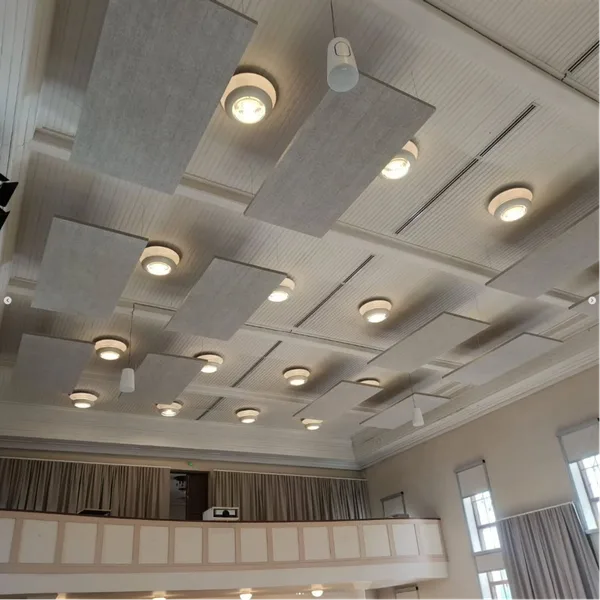
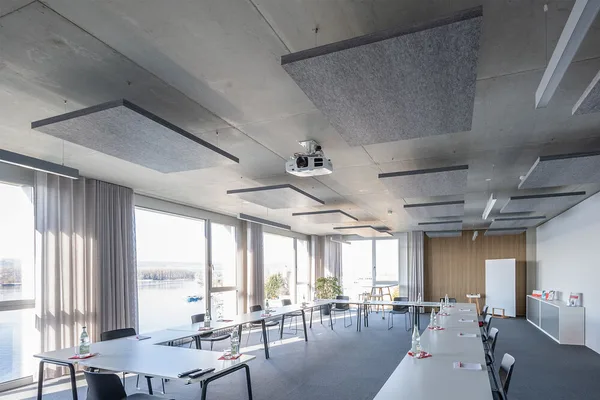
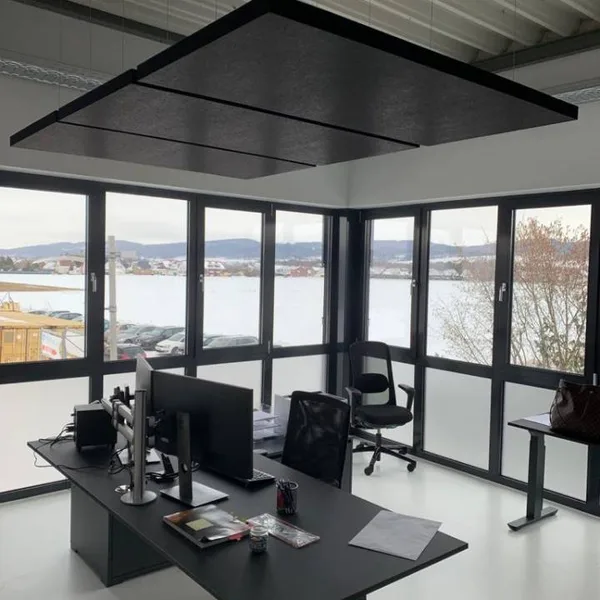
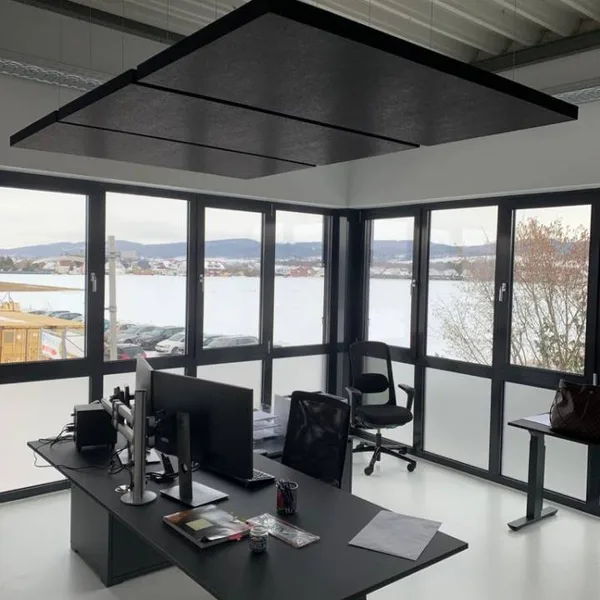
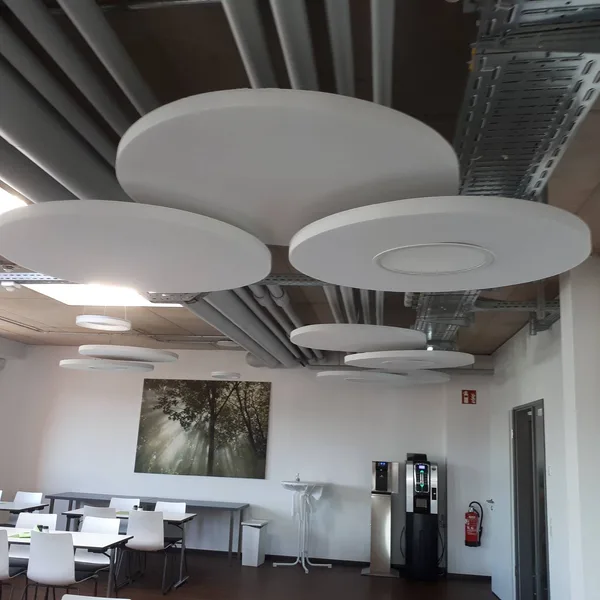
Ceiling rafts and acoustic baffles are free-hanging sound absorbers for rooms where a closed acoustic ceiling is impossible or unwanted. Because they hang freely in the space, they absorb on both faces and around the edges. Their effective absorbing area is therefore larger than their footprint, which is why they are often rated by the equivalent absorption area A in m² per element.

Free-hanging elements are the right choice when a continuous acoustic ceiling is ruled out: with active concrete-core cooling, visible building services (ventilation, cabling, sprinklers), a deliberate industrial or exposed-concrete look, or when an existing room needs absorption added later. Instead of closing the ceiling over its whole area, you hang a calculated number of rafts or baffles into the room.

Last updated: 28 giugno 2026

matching products
147
datasets total
1,896
equivalent absorption area
A in m²
reverberation-chamber test
Measurement data

Acoustic baffles with measurement data

Free-hanging products (rafts, islands, baffles) with stored measurement data, sorted by absorption coefficient.

View all in search
  • aPerf® panelαw 1,00

    BK Raumakustik

    aPerf® panel

  • B11 Archisonic Feltαw 1,00EPD

    B11

    B11 Archisonic Felt

  • Isola fonoassorbente a soffitto SilentRoot cloudαw 1,00EPD

    SilentFiber

    Isola fonoassorbente a soffitto SilentRoot cloud

  • Schallsauger ALU LINE SKY HORIZONTALαw 1,00

    SCHALLSAUGER (KASPER GmbH)

    Schallsauger ALU LINE SKY HORIZONTAL

  • Schallsauger FRAMELESS BAFFLEαw 1,00

    SCHALLSAUGER (KASPER GmbH)

    Schallsauger FRAMELESS BAFFLE

  • Schallsauger FRAMELESS BAFFLE BAFFLEαw 1,00

    SCHALLSAUGER (KASPER GmbH)

    Schallsauger FRAMELESS BAFFLE BAFFLE

  • Schallsauger FRAMELESS SKYαw 1,00

    SCHALLSAUGER (KASPER GmbH)

    Schallsauger FRAMELESS SKY

  • SUAM Assorbitore universaleαw 1,00

    SUAM Schall- & Akustikmanufaktur GmbH

    SUAM Assorbitore universale

  • SUAM Vela acustica rettangolareαw 1,00

    SUAM Schall- & Akustikmanufaktur GmbH

    SUAM Vela acustica rettangolare

  • SUAM Vela acustica rotondaαw 1,00

    SUAM Schall- & Akustikmanufaktur GmbH

    SUAM Vela acustica rotonda

  • Vela acustica FURALαw 1,00EPD

    Fural Systeme in Metall GmbH

    Vela acustica FURAL

  • Pannello acustico SilentFELT bluefiberαw 0,95EPD

    SilentFiber

    Pannello acustico SilentFELT bluefiber

Free-hanging solutions and a closed acoustic ceiling compared

Free-hanging solutions and a closed acoustic ceiling compared
EffectKey figureMountingBest for
Ceiling raft / island (horizontal)Both faces and edges, broad baseline absorptionA in m² per element (plus αw)Hung horizontally, parallel to the ceilingOpen ceilings, concrete-core cooling, open space
Acoustic baffle (vertical)Both faces, high absorption on little footprintA in m² per baffle (plus αw)Hung vertically, arrayed in a gridHalls, industry, tall rooms, visible services
Closed acoustic ceilingOne side (underside), even across the whole roomαw (referred to the ceiling area)Suspended over the area or surface-mountedNew builds, offices, when the ceiling is available

Raft or baffle? Horizontal versus vertical

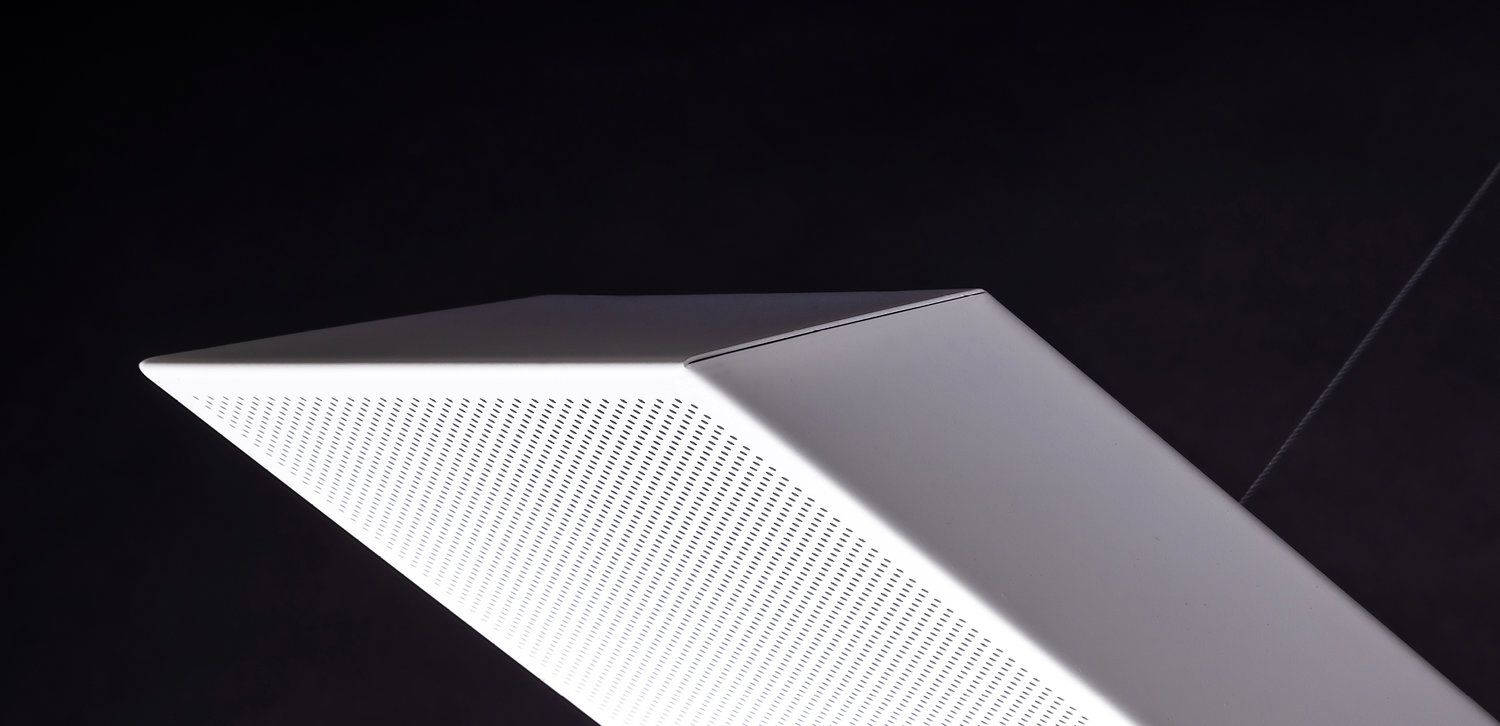
A ceiling raft or acoustic island hangs horizontally, parallel to the ceiling, acting like a floating partial surface. It suits targeted zones such as above a meeting table or as a distributed grid in an open-plan space. An acoustic baffle hangs vertically, on edge, and is arrayed in a grid. On little footprint it offers a lot of absorbing surface.

Both use the same principle: they absorb on both faces and around the edges. Baffles are preferred in tall rooms and halls where a lot of absorption is needed on a limited ceiling area. Rafts predominate where a visual zoning of the room is also wanted.

Why the equivalent absorption area A matters

For closed ceilings or wall absorbers, the weighted sound absorption coefficient αw describes the effect per square metre of mounted area. Free-hanging elements, however, absorb on both faces and around the edges, so their effect cannot sensibly be referred to a single surface. Instead, the equivalent absorption area A in m² per element is stated.

A is determined in a reverberation-chamber measurement for a defined arrangement and a defined spacing. The value tells you directly how many m² of perfect absorption a single raft or baffle replaces. For a design, you sum the A values of the planned elements and calculate the reverberation time.

Quantity and spacing drive the result

With free-hanging solutions, the number of units and their spacing control the effect. When rafts or baffles are distributed with gaps between them, more edge area contributes to absorption, so each element realises almost its full A value. Hung close together, they approach the behaviour of a closed surface and the effect per element drops.

What matters is the stored measurement: A is determined for a particular distance from the structural ceiling and a particular arrangement. These conditions should be kept in the planning. The Acoustic Index reverberation calculator uses each product's measurement data directly for the design.

Frequently asked questions

What is the difference between a ceiling raft and a baffle?+

A ceiling raft or acoustic island hangs horizontally, parallel to the ceiling, acting like a floating partial surface. An acoustic baffle hangs vertically, on edge, and is arrayed in a grid. Both absorb on both faces and around the edges. Baffles offer a lot of absorption on little footprint and are especially suited to tall rooms and halls.

What does the equivalent absorption area A mean?+

A is the equivalent absorption area in m² per element. It states how many square metres of perfect absorption a single raft or baffle replaces. Because free-hanging elements absorb on both faces and around the edges, their effective area is larger than their footprint. That is why A is used instead of αw alone.

How many ceiling rafts do I need and at what spacing?+

Quantity and spacing drive the result. You sum the A values of the planned elements and calculate the reverberation time from them. Rafts or baffles distributed with gaps realise almost their full A value, because more edge area contributes. Hung close together, the effect per element drops. Keep the stored measurement distance from the structural ceiling.

Can I retrofit acoustic rafts into an existing room?+

Yes, that is a key advantage of free-hanging solutions. They can be hung from an existing ceiling later, without closing the ceiling over its whole area. This suits rooms with visible building services, exposed concrete or active concrete-core cooling, where a closed acoustic ceiling is ruled out. The amount of absorption can be dosed precisely through the number of units.

When is a ceiling raft better than a closed acoustic ceiling?+

A ceiling raft is the right choice when the ceiling cannot or should not be closed over its area: with active concrete-core cooling, visible ventilation and services, a deliberate industrial look, or when retrofitting an existing room. A closed acoustic ceiling acts more evenly across the whole room and makes sense when the ceiling area is freely available.

What fire class do ceiling rafts and baffles have?+

The fire class ranges from A1 (non-combustible) to F. In ordinary offices fire safety is rarely mandatory, but it is required in escape routes and certain public buildings. Since free-hanging elements hang exposed in the room, the class is worth checking. You can filter by minimum fire class in the search.

Further reading

  • Acoustic ceilings: systems, values and sizingThe ceiling is the largest uninterrupted surface in a room. Four system families, their typical αw values and the DIN 18041 sizing.
  • Sound absorbers for offices and open-plan workspacesCeiling rafts, wall absorbers and screens against open-plan noise, with rules of thumb and measurement data.
  • Reverberation Time Calculator: RT60 with Sabine & EyringCalculate reverberation time (RT60) with the Sabine formula, check DIN 18041 target values and size the required absorber area including panel count. With a worked office example.

Find matching ceiling rafts and baffles

Compare all free-hanging absorbers with measurement data and filter by αw, material and fire class.

Ceiling rafts in search

Acoustic Index

Acoustic IndexAcoustic Index

Il database dei parametri acustici dei materiali. Ogni valore presentato in modo trasparente.

Prodotti

  • Pannelli fonoassorbenti
  • Pannelli acustici
  • Pannelli acustici in legno
  • Schiuma fonoassorbente
  • Quadri fonoassorbenti
  • Isole fonoassorbenti
  • Tutti i prodotti

Azienda

  • Chi siamo
  • News
  • Contatti
  • Per i produttori
  • Read API

Conoscenza

  • Acoustic solutions
  • Calcolatore del tempo di riverberazione

Legale

  • Note legali
  • Privacy
  • Condizioni generali
  • Termini di utilizzo

© 2026 Acoustic Index. Tutti i diritti riservati.