Sound absorbers for offices and open-plan workspaces
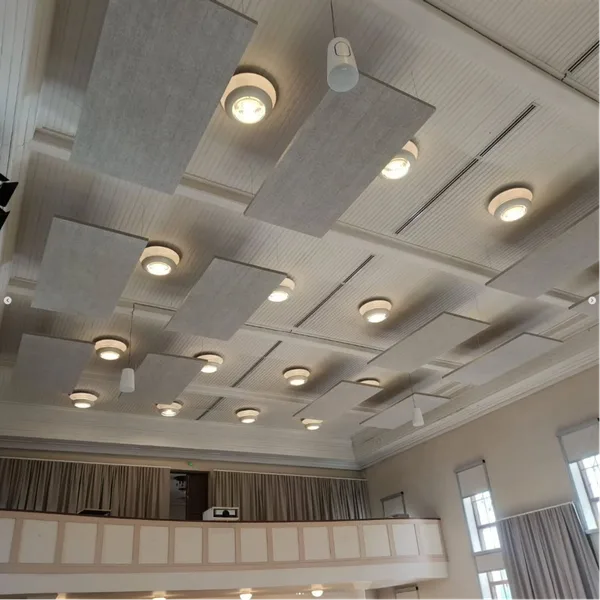
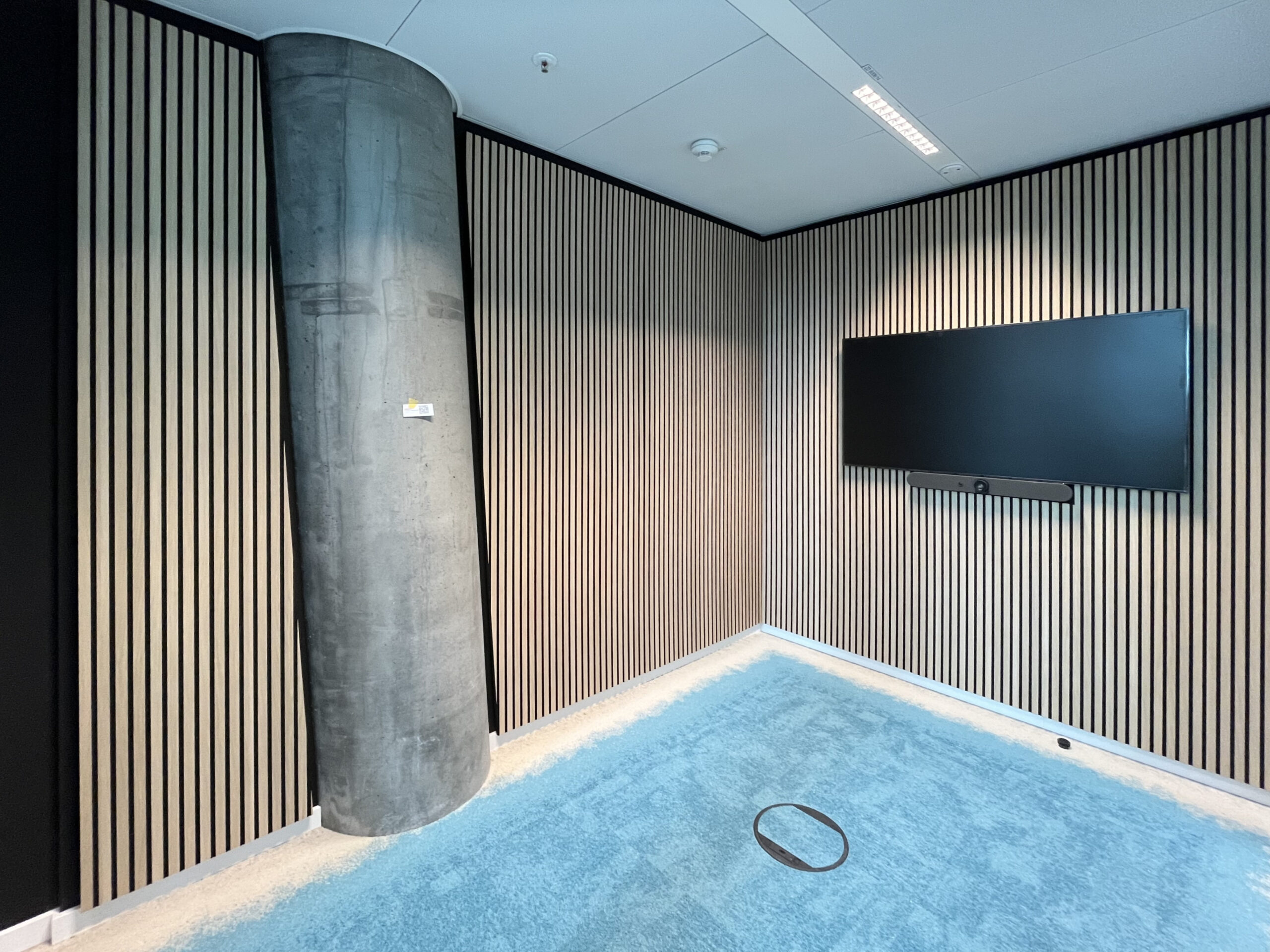
Offices get quieter when hard surfaces are combined with broadband absorbers: ceiling rafts and acoustic ceilings lower the overall level, while wall absorbers and screens damp direct reflections between workstations. A practical rule of thumb is 0.15 to 0.25 m² of absorber per square metre of floor area at αw ≥ 0.8.
The most common mistake in open-plan offices is a hard ceiling above a large, reverberant room. Because the ceiling is the largest free surface, it delivers the most absorption per square metre. Only after that do wall and screen solutions against direct speech transfer between neighbouring desks pay off.
Last updated: 28 giugno 2026
- products
- 147
- datasets total
- 1,896
- absorption coefficient
- αw up to 1.0
- stored per product
- Measurement data
Interactive
How much ceiling does your room need? The DIN 18041 check
Pick a use and a ceiling height. The check shows the standard's A/V requirement and the ceiling coverage that follows.
Room use (group B)
Clear ceiling height
3,0 m
- A/V requirement
- 0,23m⁻¹ (absorption area per m³)
- Absorption per m² of floor
- 0,69m²/m²
- Ceiling coverage at class A (αw 0.9)
- 76%
Simplified sizing per DIN 18041, room group B. Furnishing and people add absorption; ceiling built-ins reduce the area. Rooms for teaching, lectures or music (group A) are designed via reverberation time.