
Wood acoustic panels: what they really do
Wood acoustic panels consist of wooden slats or perforated wood boards with an absorbing layer behind them. The wood itself reflects sound; the panel becomes effective through the open slots that let sound reach the felt or acoustic fleece. The trending slat panels with a thin felt backing noticeably improve a reverberant room but remain limited. Real wood acoustic systems with a thicker absorber layer and a cavity reach the best classes, recognisable by a measured αw value.
This page explains without jargon how wood panels work acoustically, how to recognise effective products, and when a certified system is worth the premium. The slot simulator lets you try out what open area and absorber layer contribute.
Last updated: 9 July 2026
- open area of effective systems
- 10–30 %
- slotted systems with backing and cavity
- up to class A
- felt of typical trend panels
- 9–19 mm
- the measurement that counts
- ISO 354
Interactive
The slot simulator: what makes the difference
Change open area and build-up, and watch decoration turn into an absorber.
Open area (slots)
12 %
Build-up behind the wood
Absorption potential
medium
Typical trend panel: an audible improvement in the mid/high range, little happens in the bass.
Schematic rating based on the build-up principle, not a measurement. What counts is the αw from an ISO 354 test of the actual product.
Wood acoustics with measurement data
Published wood products with stored ISO 354 measurements, sorted by absorption coefficient.
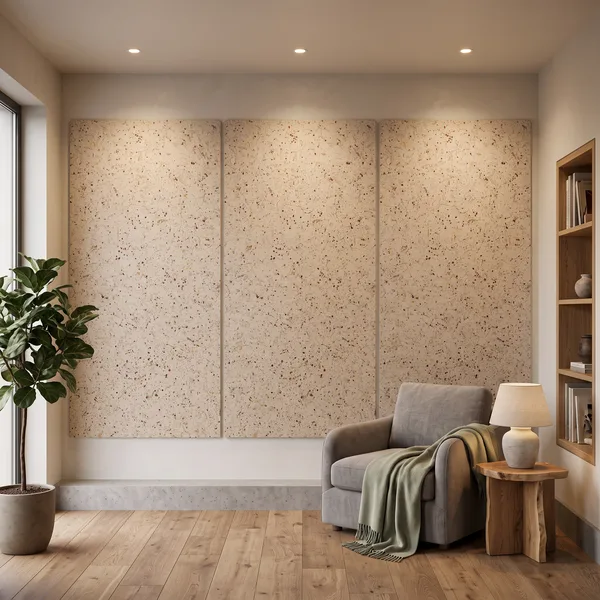 αw 1.00
ORGANOID
Acoustic Panel Modular
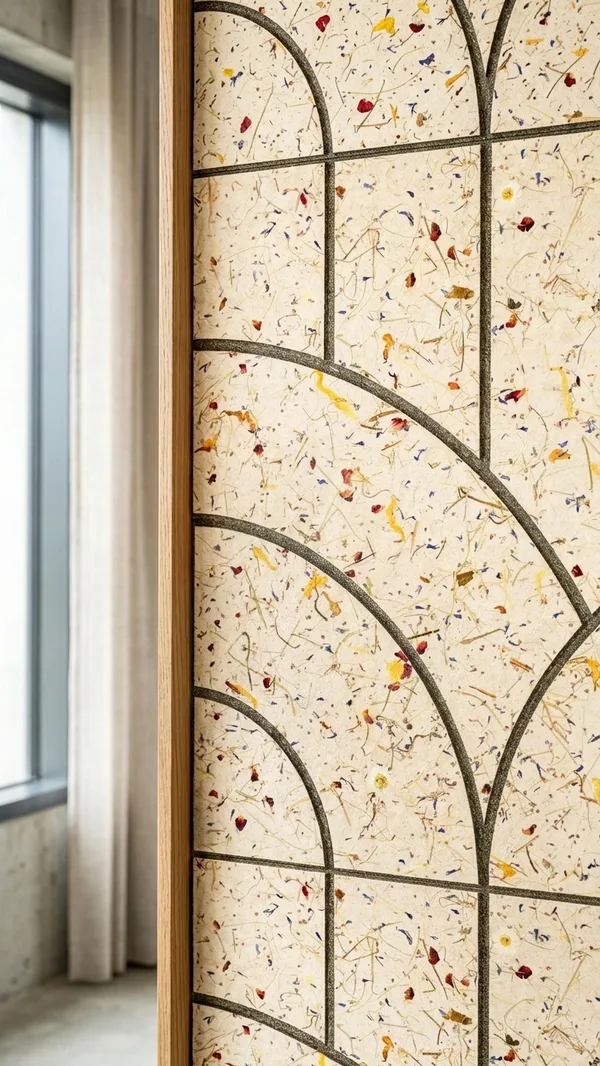 αw 1.00
ORGANOID
Acoustic Tiles Modular
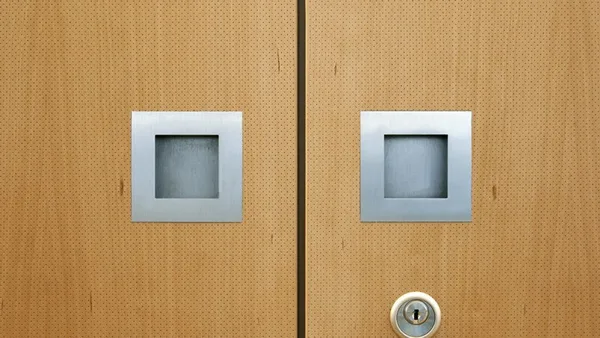 αw 1.00
alpha AKUSTIK
alpha AKUSTIK NANOLITE
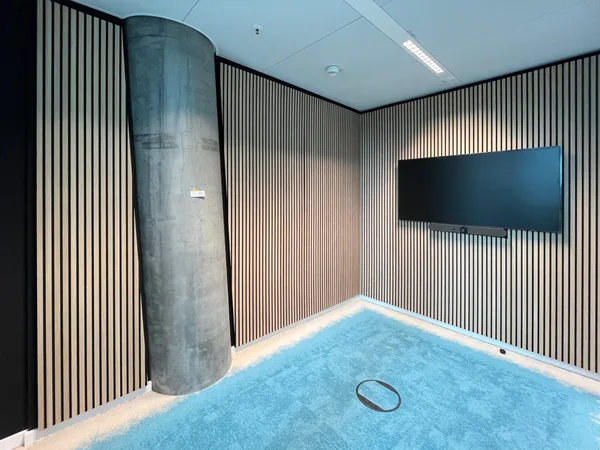 αw 1.00
BK Raumakustik
LinePerf®
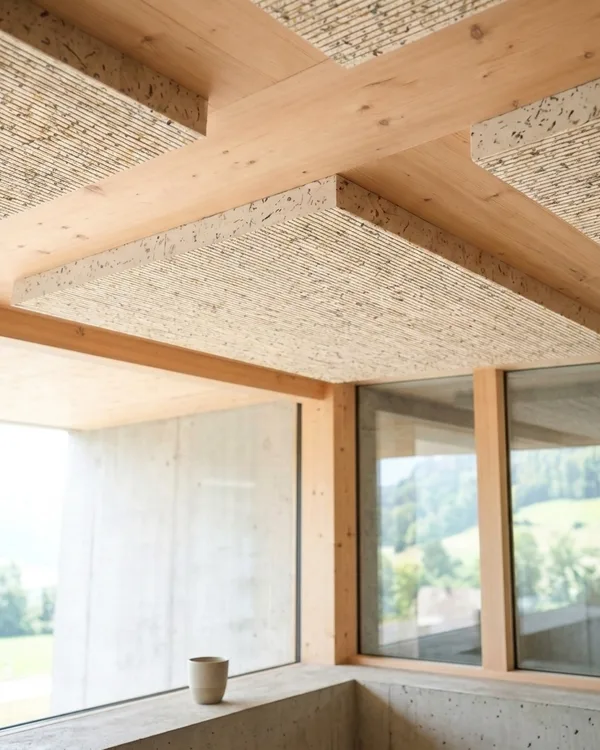 αw 1.00
ORGANOID
Wall and Ceiling Absorber Infinity Wall & Sky
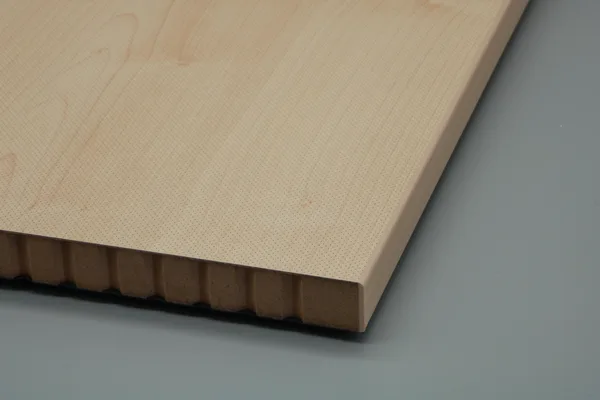 αw 0.95
BVS Akustik
AKUSTIbohr nano Laser Acoustic Panel
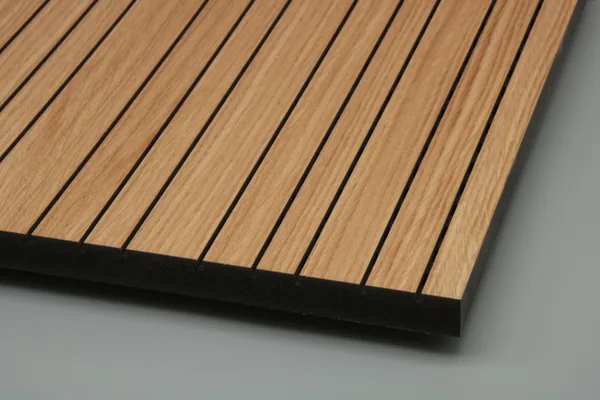 αw 0.95
BVS Akustik
AKUSTIpan SL Acoustic Panel
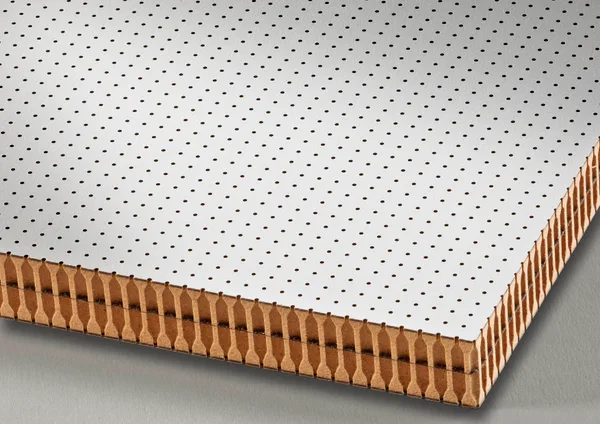 αw 0.95
BVS Akustik
AKUSTIpur Acoustic Furniture Front
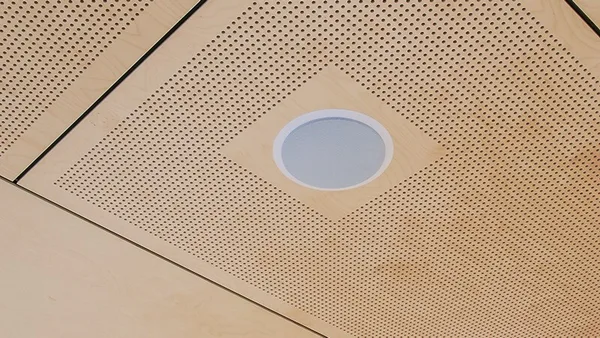 αw 0.95
alpha AKUSTIK
alpha AKUSTIK Perforated Panel
 αw 0.95
akustikplus GmbH & Co. KG
proline classic
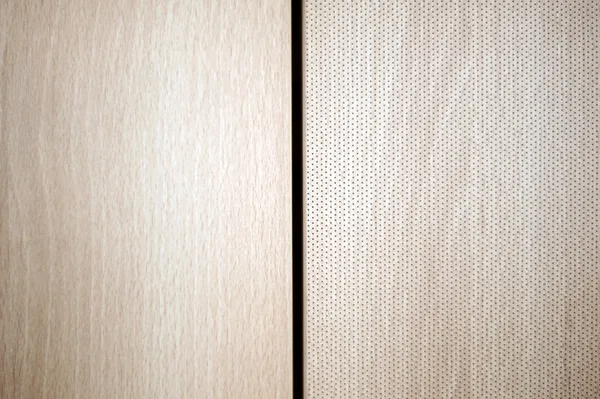 αw 0.95
akustikplus GmbH & Co. KG
proline finest
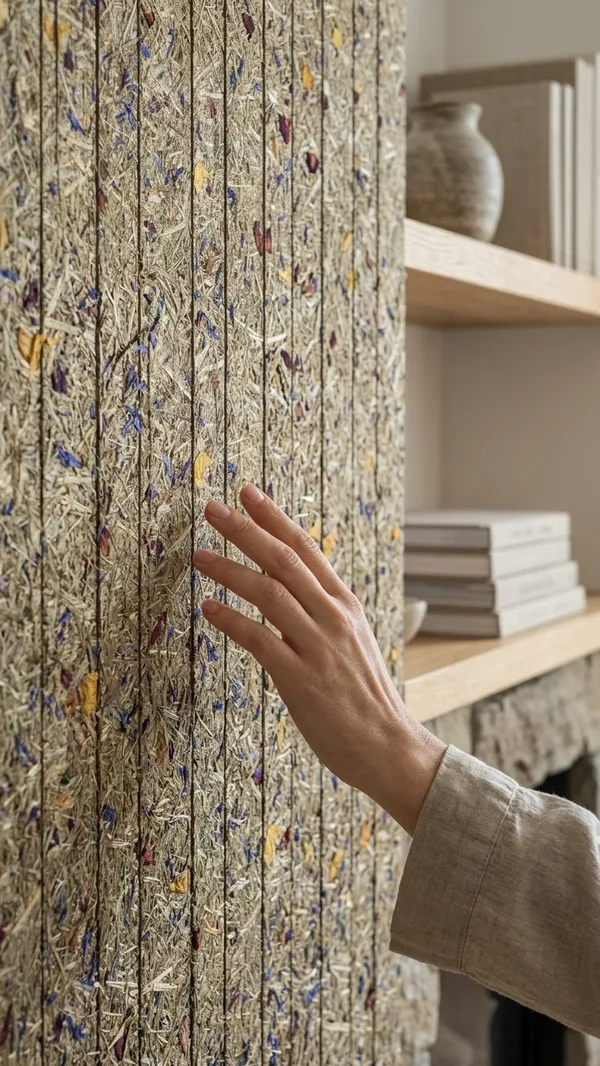 αw 0.90
ORGANOID
Acoustic Panel Infinity Fine | Bold
Three kinds of wood panels compared
| Build-up | Absorption | Mounting | Best for | |
|---|---|---|---|---|
| Trend slat panel (akupanel) | Wood slats on 9 to 19 mm felt, glued or screwed directly | Noticeable improvement, limited in the bass and with thin felt | Directly on the wall, easy to DIY | Living rooms, home offices, design-led budget projects |
| Wood acoustic system (slotted/perforated) | Wood board with slots or perforation, acoustic fleece, often 30 to 50 mm backing or cavity | Up to class A/B, proven by an ISO 354 measurement per build-up | On a substructure on wall or ceiling, usually installed professionally | Offices, conference rooms, schools, public spaces |
| Closed wood cladding | Solid wood or board without openings | Practically none (wood reflects sound) | Like any wall cladding | Pure looks, not an absorber |
How a wood panel absorbs sound
Wood is hard and dense; it throws sound back like a plastered wall. That a wood panel still helps against reverberation comes down to three things: the open slots or holes between the slats, the soft layer behind them (felt, acoustic fleece or mineral wool), and the distance to the wall. Sound travels through the openings into the soft material and is converted into heat there.
This gives the most important buying rule: it is not the wood that decides, but what happens between and behind the wood. A panel with wide slats, narrow gaps and thin felt looks just like a certified acoustic system, yet absorbs far less.
The honesty check: trend panel versus acoustic system
The popular felt-backed slat panels are not fake: compared with a bare wall they audibly improve the room, especially at mid and high frequencies, exactly where voices and clattering dishes live. Their limits: the felt is usually only 9 to 19 mm thick and sits directly on the wall. Such a build-up barely reaches low frequencies, and total absorption stays below a certified system.
Wood acoustic systems from commercial construction work with more open area, a thicker absorber layer (often 30 to 50 mm) and a cavity behind the board. Such build-ups reach measured αw values up to classes B and A. The difference is not in the ad copy but in the test report: whoever states an ISO 354 measurement including the build-up has something to show.
How to recognise effective wood panels
Three pieces of information separate an acoustic product from a decorative panel. First, a measurement: the weighted sound absorption coefficient αw from an ISO 354 reverberation-room test, ideally with the absorber class (A to E). Second, the tested build-up: slat or perforation ratio, type and thickness of the backing, distance to the wall. The value applies only to exactly that build-up. Third, for offices and public rooms, the fire class; wood acoustics usually reaches flame-retardant (B-s1/s2).
Without these, you are buying looks. That can be perfectly fine, just do not expect room acoustics. The Acoustic Index catalogue stores per-band measurement data for every listed product so panels can be compared honestly.
How much area, and where
As a rule of thumb for a normally reverberant living or working room: roughly 15 to 25 percent of the floor area as effective absorber area, so about 3 to 5 m² of well-absorbing surface for a 20 m² room. The weaker the panel, the more area you need for the same result; that is exactly why the αw value matters.
For placement: go where the sound comes from and reflects. In living spaces that is the large free wall areas at ear height, ideally on two opposite sides, or the ceiling. A full slat wall is attractive and acoustically sensible if the build-up is right. For a precise design, the reverberation calculator works with real product data.
Solid wood, veneer or foil
For acoustics the surface hardly matters: whether solid oak, real wood veneer or decor foil, the openings and the absorber layer decide. For looks, durability and indoor climate there are differences: veneer on a carrier board is dimensionally stable and usually cheaper than solid wood; foil is the budget option and ages most visibly.
For ecological building, look additionally at the carrier board (emissions, certificates) and at the absorber layer; besides mineral wool, PET fleeces from recycled material are increasingly used. Some manufacturers in the index provide environmental product declarations (EPD), which can be filtered in the search.
Frequently asked questions
Do the advertised wood slat panels actually do anything acoustically?
Yes, but with limits. Slats on 9 to 19 mm felt, mounted directly on the wall, noticeably damp mid and high frequencies; the room sounds calmer. Low frequencies and class A performance are out of reach for such build-ups. That requires more open area, a thicker absorber layer and ideally a cavity.
What should I look for when buying?
A measurement to ISO 354: the weighted absorption coefficient αw with its class, including the tested build-up (slot ratio, backing, wall distance). Without these, the panel is a decorative product. For offices and public rooms, also check the fire class.
Does the wood itself absorb sound?
No. Wood is hard and reflects sound. Absorption happens in the open slots or holes and in the soft layer behind them (felt, fleece, mineral wool). A closed wood cladding without openings is acoustically almost ineffective.
How many square metres of wood panels does my room need?
As an estimate: 15 to 25 percent of the floor area as effective absorber area, so roughly 3 to 5 m² for a 20 m² living room. Weaker panels need correspondingly more area. The exact number depends on room, target and product; the reverberation calculator computes it with real measurement data.
Wall or ceiling: where do wood panels work better?
Both work. The ceiling is usually the largest free surface and acts on the whole room; the wall acts specifically against reflections at ear height, for example between sofa and TV wall or in the dining area. In strongly reverberant rooms the combination works best.
Do wood panels need a gap to the wall?
A cavity behind the panel clearly improves absorption towards low frequencies, because the absorber then sits where the air moves fast. Directly glued panels work mainly in the mid and high range. The measured value always applies to the tested distance.
Are wood acoustic panels suitable for fire safety requirements?
Commercial-grade wood acoustics usually reaches flame-retardant (B-s1,d0 or B-s2,d0). Escape routes and certain public areas require non-combustible finishes, where wood is mostly ruled out. The class is on the datasheet and can be filtered in the search.
What is the difference between acoustic panels and acoustic tiles?
The terms overlap. Panels usually refers to visible design elements for wall and ceiling, often in slat or cassette looks. Acoustic tiles or boards refers to functional flat products like mineral wool ceiling tiles or perforated gypsum boards. Acoustically the same figure counts in both cases: αw per ISO 354.
Compare wood acoustics with real measurements
All wood products in the catalogue with ISO 354 data per frequency band, filterable by αw, fire class and EPD.
Wood acoustics in search