
Acoustic foam: what it does and what it doesn't
Acoustic foam is an open-cell foam made of melamine resin (such as Basotect) or polyurethane that converts sound into heat through air friction inside its pores. From the mid range up it is excellent: 50 mm of melamine foam reaches absorption coefficients close to 1.0 from 500 Hz. Below that the effect drops steeply, and wedges or pyramids do not change this. What matters are thickness, open pores and a real ISO 354 measurement.
This page shows the accredited measurement values per material thickness, explains the physical limit in the low end and compares melamine with PU foam. The interactive thickness explorer shows how a class D panel at 20 mm becomes a class A panel at 60 mm.
Last updated: 9 July 2026
- Basotect 60 mm, direct wall mounting
- αw 0.95 (A)
- αs from 500 Hz at 50 mm melamine foam
- ≈ 1.0
- quarter wavelength at 50 Hz
- 1.7 m
- fire class of untreated melamine foam
- C-s2,d0
Interactive
What thickness does: real Basotect measurements
Pick a thickness and see the accredited ISO 354 curve. Same foam, four different results.
Weighted absorption coefficient
0.85(H)
Absorber class
B
50 mm is the usual working range: class B, near-complete absorption from 500 Hz.
Source: BASF Technical Information “Acoustics Basotect G”, reverberation-room measurement to ISO 354, mounted directly on the wall (type A).
Foam absorbers with measurement data
Published foam products with stored ISO 354 measurements, sorted by absorption coefficient.
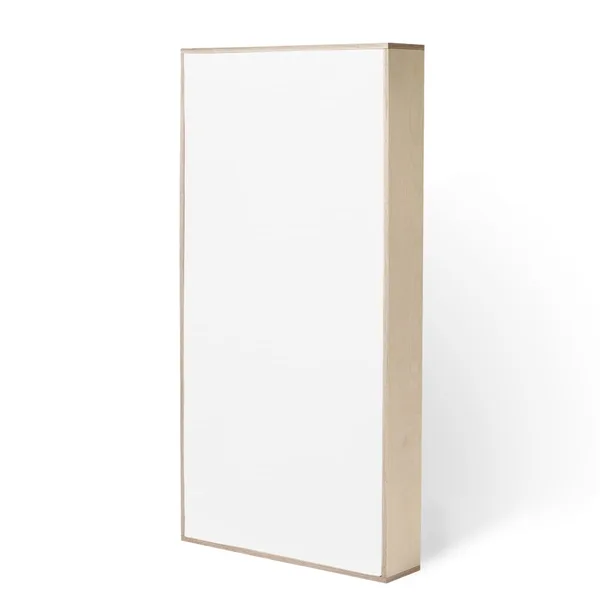 αw 1.00
MW Acoustics
Broadband Absorber Premium
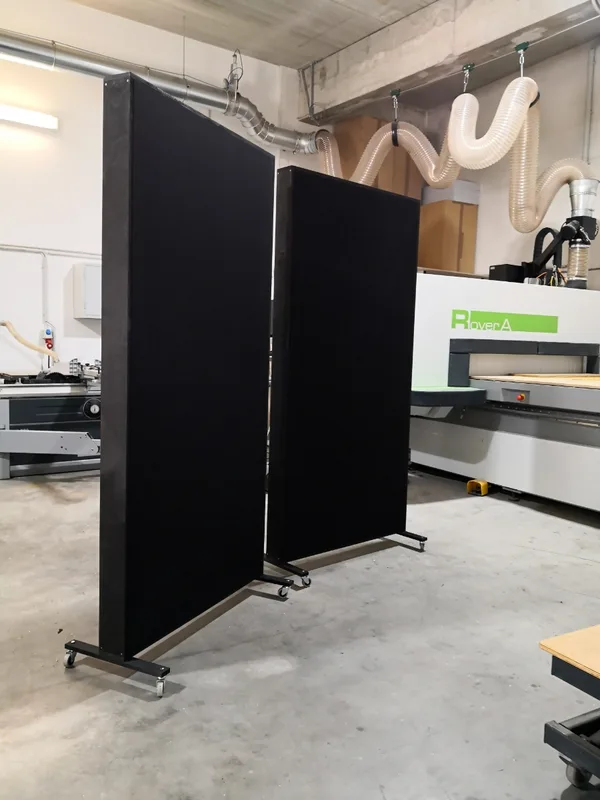 αw 1.00
MW Acoustics
Free-Standing Acoustic Screen Premium
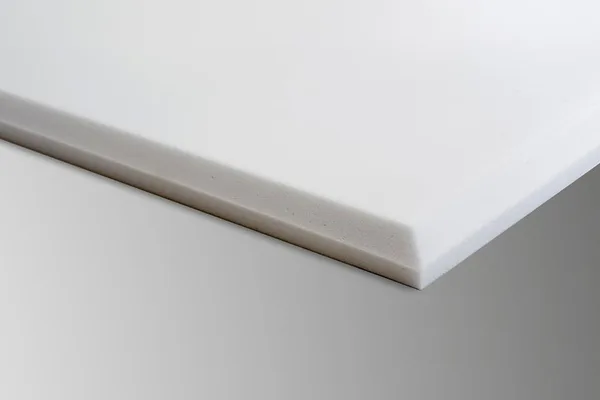 αw 1.00
SONATECH GmbH + Co. KG
SONATECH Baso Decor
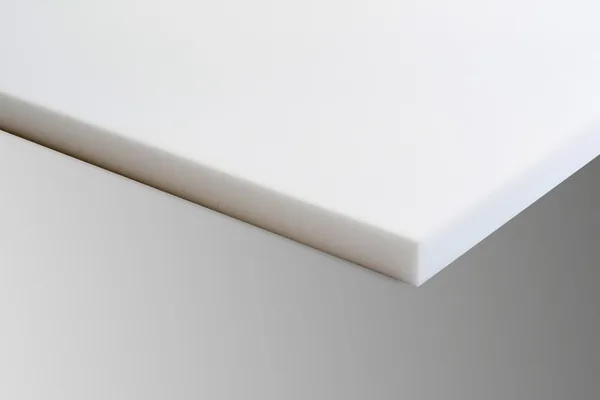 αw 1.00
SONATECH GmbH + Co. KG
SONATECH Baso Plan
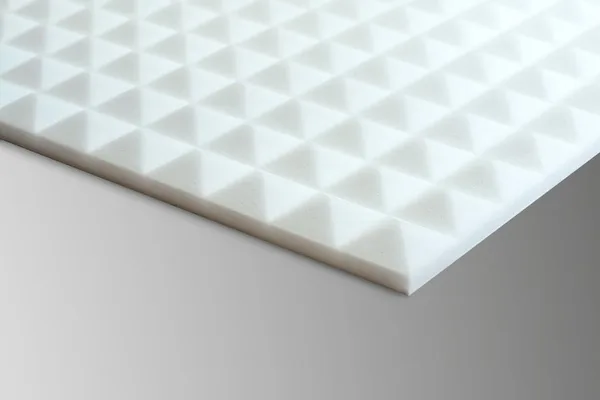 αw 1.00
SONATECH GmbH + Co. KG
SONATECH Baso Pyramide
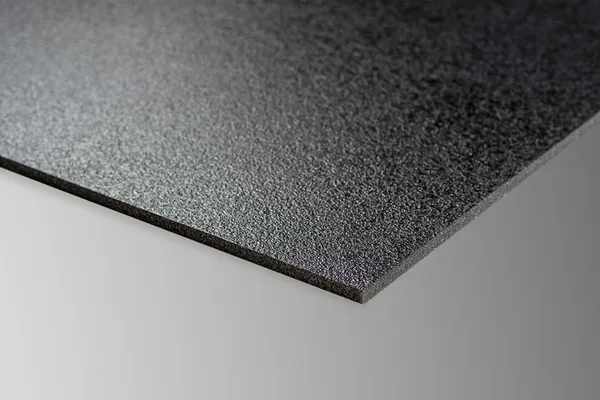 αw 0.95
SONATECH GmbH + Co. KG
SONATECH Pur Skin
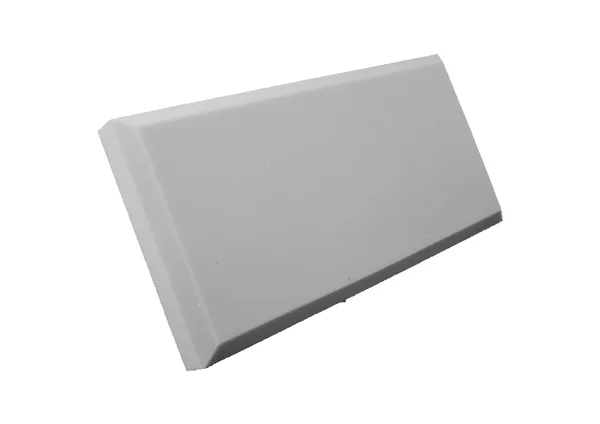 αw 0.95
FoamTnC UG
soundSTOMP Basotect G+ acoustic panel
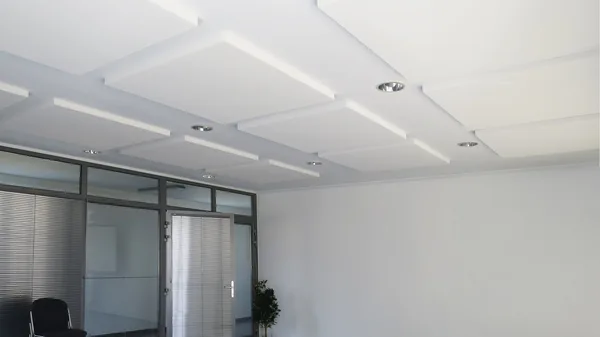 αw 0.90
raumton
raumton Colour-coated ceiling absorber
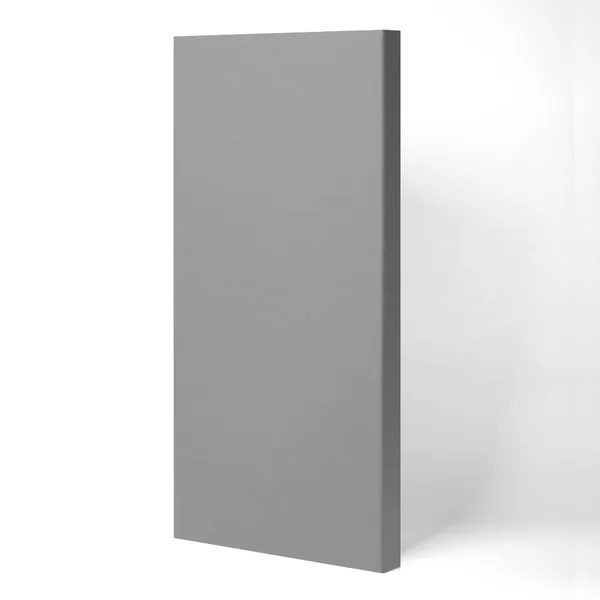 αw 0.85
MW Acoustics
Absorber Living
 αw 0.85
MW Acoustics
Ceiling Raft Living
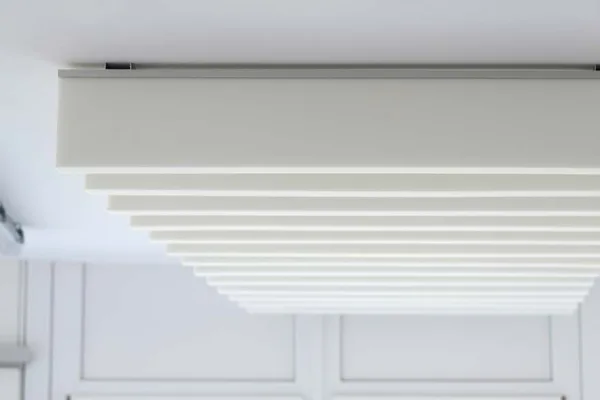 αw 0.75
SONATECH GmbH + Co. KG
SONATECH MultiLane
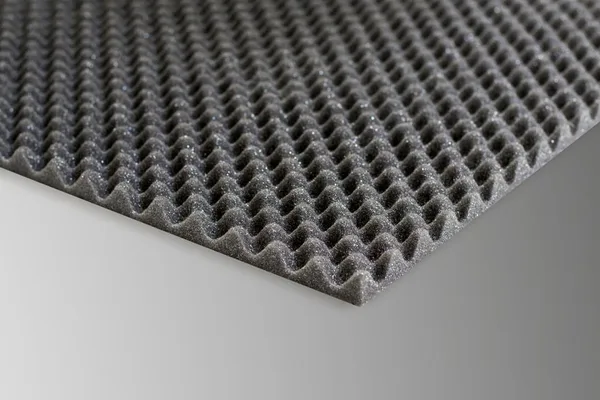 αw 0.60
SONATECH GmbH + Co. KG
SONATECH Pur Sinus
Melamine foam, PU foam and a mineral wool panel compared
| Fire behaviour | Weight | Bass at 50 mm | Typical use | |
|---|---|---|---|---|
| Melamine resin foam (e.g. Basotect) | Flame-retardant without additives (C-s2,d0 / B1) | Very light, around 9 kg/m³ | Weak below 250 Hz, αs around 0.2 at 125 Hz | Offices, studios, public rooms, ceiling and wall |
| PU foam (wedges/pyramids) | Usually B2 (normal flammability), B1 only with treatment | Light, 20 to 40 kg/m³ depending on density | Weak, the effective thickness of profiles is lower | Home studios and budget projects |
| Mineral wool panel (for comparison) | Non-combustible (A1/A2) | Heavier, 40 to 60 kg/m³ plus frame | Better: higher flow resistivity catches up in the bass | When class A fire rating or low end matters |
How acoustic foam absorbs
Open-cell foam is a porous absorber: sound waves force the air inside the fine pores to oscillate, and friction converts sound energy into heat. This only works if the pores are open and permeable. Closed-cell foams, such as packaging or thermal insulation foam, are acoustically almost useless because air cannot enter the material.
Porous absorbers work where air particles move fast, which is away from the wall. That is why performance grows with material thickness and, where possible, with an air gap behind the panel. What counts for selection is the measured absorption coefficient to ISO 354, not the look of the surface.
Thickness beats shape: the accredited Basotect values
For Basotect G+, the most widely used melamine foam, accredited reverberation-room measurements to ISO 354 exist per thickness (BASF Technical Information, mounted directly on the wall, type A). The series shows what thickness does: 20 mm reaches αw 0.45, only class D. 40 mm reaches αw 0.70 (class C), 50 mm αw 0.85 (class B) and 60 mm αw 0.95, class A.
Per frequency band it is even clearer: at 500 Hz the 20 mm panel absorbs 40 percent of the energy, the 60 mm panel practically all of it. At 125 Hz even the 60 mm panel only reaches 0.25. Whoever decides the thickness decides the result. The explorer at the top of this page shows the full measured curve per thickness.
The bass fallacy: why 50 mm of foam does not absorb bass
Porous absorbers need material depth relative to wavelength. As a rule of thumb, a layer works well down to the frequency whose quarter wavelength it covers. A 50 Hz tone has a quarter wavelength of 1.7 metres; a 5 cm panel is more than 30 times too thin for it. Real broadband performance starts around 500 Hz for 50 mm of foam, and around 250 to 300 Hz for very thick builds.
Marketing claims like "effective from 60 Hz" do not survive measurement. Low-frequency problems, such as boominess in a home studio, need different tools: thick porous builds with an air gap, panel resonators or Helmholtz resonators. For speech, calls and office reverberation this rarely matters though; the mid range dominates there, and that is exactly where foam is strong.
Wedges, pyramids or flat?
Wedge and pyramid profiles are mostly cosmetic. Acoustically the effective material thickness counts, and a profiled 50 mm element contains far less material than a flat 50 mm panel because the valleys are missing. The tips add a little scattering and surface area, but that does not compensate the missing material.
To maximise effect per centimetre of build-up, choose flat panels at the largest workable thickness. If you want the studio look, choose profiles, but ask for absorption values measured on the actual profile, not on the nominal thickness.
Melamine or PU: fire rating often decides
Melamine resin foam is flame-retardant without additives (Euroclass C-s2,d0, formerly B1) and extremely light at around 9 kg/m³. It is the default for offices, public buildings and anywhere building codes demand flame-retardant materials. PU foam is cheaper, usually reaches only B2 untreated, and yellows faster under UV light.
For private hobby rooms PU is often fine. As soon as a room is used commercially or receives the public, check the fire requirement before deciding the material question. The fire class is stated on every serious datasheet, and the search can filter by minimum fire class.
How to recognise serious suppliers
A serious product states the measurement standard (ISO 354, reverberation room), the mounting used in the test (directly on the wall or with an air gap), the weighted absorption coefficient αw with its class and ideally the values per frequency band. Claims without a standard, without a mounting type, or with absorption coefficients above 1.0 as a product promise are warning signs: ISO 11654 caps αw at 1.0, and raw αs values above 1.0 only arise from edge diffraction in the test, typically up to about 1.05.
Acoustic Index lists the stored per-band measurement data and its source for every product. That lets you compare a cheap wedge panel honestly against a Basotect panel or a mineral wool absorber before buying.
Frequently asked questions
What does acoustic foam actually do?
A lot in the mid and high range, little in the bass. 50 mm of melamine foam absorbs practically all incident sound energy from 500 Hz upwards (αs close to 1.0, measured to ISO 354). At 125 Hz the same build-up sits around 0.2. That is exactly right for speech intelligibility, calls and office reverberation, and almost useless against boominess and bass.
How thick should acoustic foam be?
As thick as workable. The accredited Basotect values show the span: 20 mm reaches αw 0.45 (class D), 40 mm αw 0.70 (class C), 50 mm αw 0.85 (class B), 60 mm αw 0.95 (class A). Below 40 mm the effect is usually too small for room acoustics; 50 to 60 mm is the usual working range.
Does acoustic foam help against bass?
Not at common thicknesses. Porous absorbers need material depth relative to wavelength; at 50 Hz the quarter wavelength is 1.7 m. Real performance starts around 500 Hz for 50 mm panels and around 250 to 300 Hz for very thick builds. Low-frequency problems call for panel or Helmholtz resonators.
Wedge foam or flat panels?
Flat panels, if effect per build-up height is the goal. A wedge or pyramid profile contains far less material than a flat panel of the same nominal thickness because the valleys are missing. The tips scatter a little and look like a studio, but they do not absorb more. Ask for measurements of the actual profile.
Is acoustic foam flammable?
It depends on the material. Melamine resin foam such as Basotect is flame-retardant without additives (C-s2,d0, formerly B1) and is accepted in most public and commercial rooms. Untreated PU foam usually reaches only B2; B1 exists only with flame-retardant treatment. The fire class is on the datasheet.
What is the difference between Basotect and cheap PU foam?
Basotect is a melamine resin foam: flame-retardant without additives, very light (around 9 kg/m³), more UV-stable and broadly documented with accredited measurements. PU foam is cheaper, weaker on fire behaviour and yellows faster. Acoustically both are close in the mid/high range if thickness and open pores are right.
Does acoustic foam help against noise from neighbours or outside?
No. Foam absorbs reverberation inside the room (sound absorption); it does not reduce transmission through walls or ceilings (sound insulation, R'w in dB). A foam layer on the wall leaves the insulation practically unchanged. Against neighbour noise only heavy, dense, decoupled constructions help.
Can the absorption coefficient be greater than 1.0?
Not as a rated value: ISO 11654 caps αw at 1.0. Raw αs data can slightly exceed 1.0 (typically up to about 1.05) because edge diffraction in the reverberation room enlarges the effective area. Product claims of absorption coefficients like 1.5 or 2.0 are physically unserious.
Compare foam absorbers with real measurements
All foam products in the catalogue with ISO 354 data per frequency band, filterable by αw, thickness and fire class.
Foam absorbers in search