
Sound absorbers for offices and open-plan workspaces
Offices get quieter when hard surfaces are combined with broadband absorbers: ceiling rafts and acoustic ceilings lower the overall level, while wall absorbers and screens damp direct reflections between workstations. A practical rule of thumb is 0.15 to 0.25 m² of absorber per square metre of floor area at αw ≥ 0.8.
The most common mistake in open-plan offices is a hard ceiling above a large, reverberant room. Because the ceiling is the largest free surface, it delivers the most absorption per square metre. Only after that do wall and screen solutions against direct speech transfer between neighbouring desks pay off.
Last updated: 28 June 2026
- products
- 147
- datasets total
- 1,896
- absorption coefficient
- αw up to 1.0
- stored per product
- Measurement data
Interactive
How much ceiling does your room need? The DIN 18041 check
Pick a use and a ceiling height. The check shows the standard's A/V requirement and the ceiling coverage that follows.
Room use (group B)
Clear ceiling height
3.0 m
- A/V requirement
- 0.23m⁻¹ (absorption area per m³)
- Absorption per m² of floor
- 0.69m²/m²
- Ceiling coverage at class A (αw 0.9)
- 76%
Simplified sizing per DIN 18041, room group B. Furnishing and people add absorption; ceiling built-ins reduce the area. Rooms for teaching, lectures or music (group A) are designed via reverberation time.
Office sound absorbers with measurement data
Broadband and high-absorption products (αw ≥ 0.6), sorted by absorption coefficient.
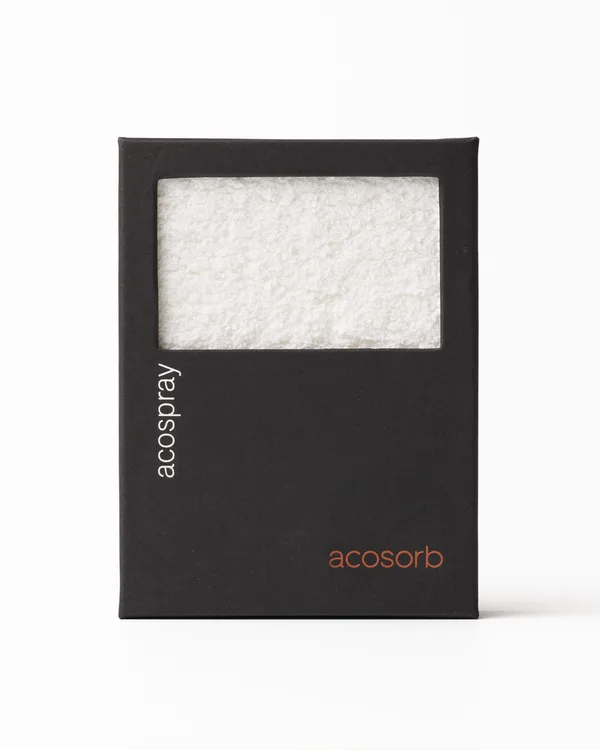 αw 1.00
Acosorb
Acospray DC1
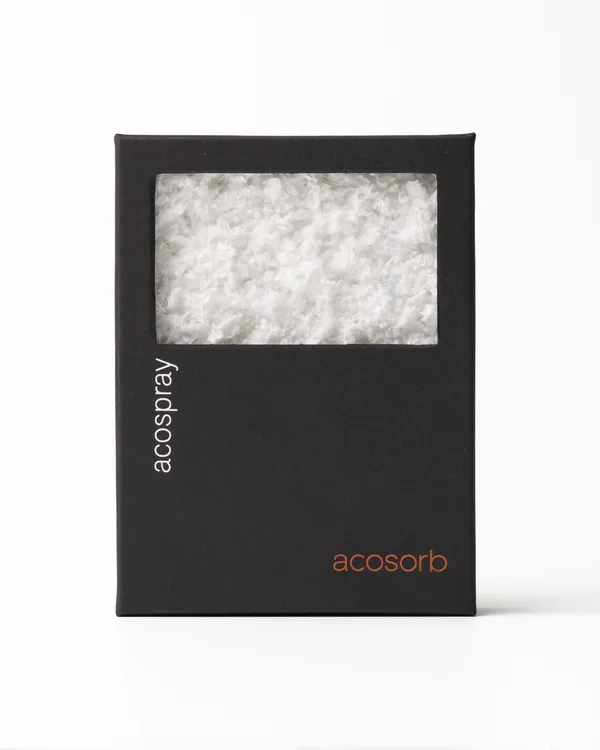 αw 1.00
Acosorb
Acospray DC3
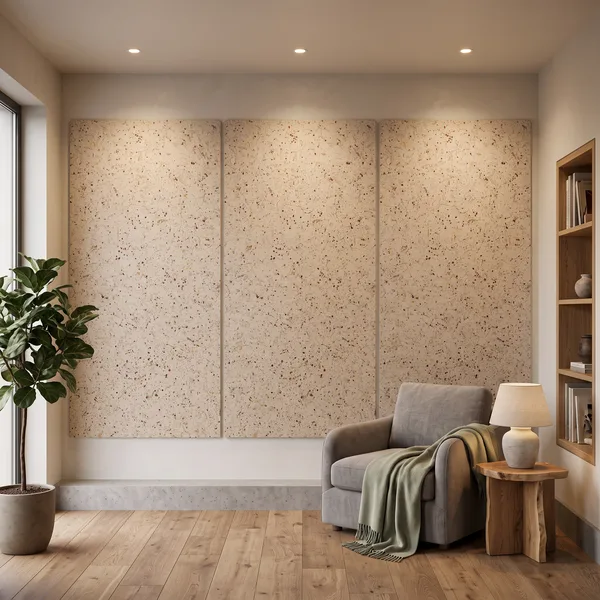 αw 1.00
ORGANOID
Acoustic Panel Modular
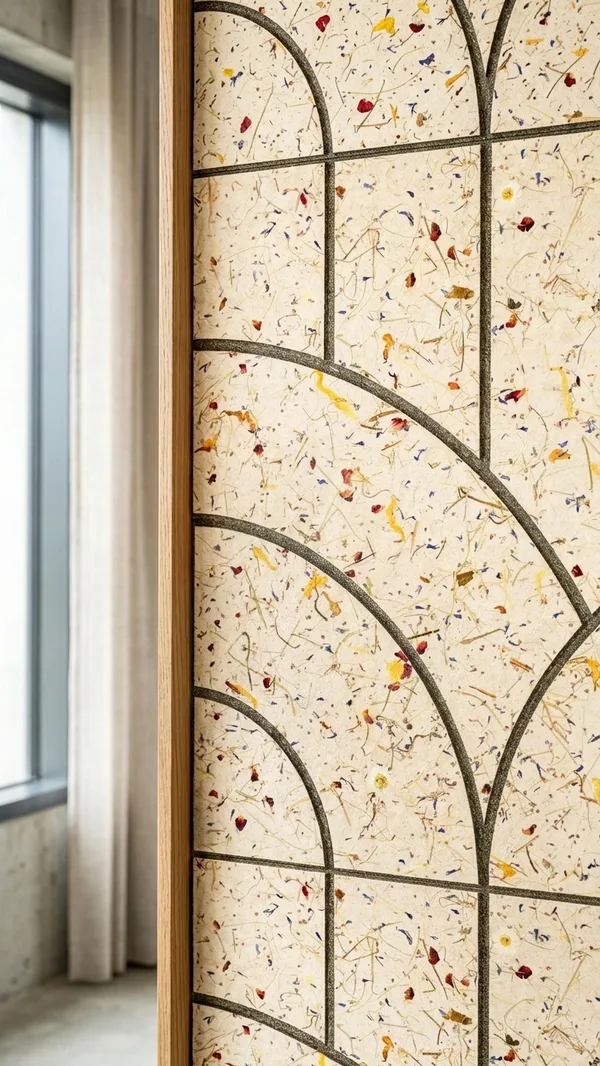 αw 1.00
ORGANOID
Acoustic Tiles Modular
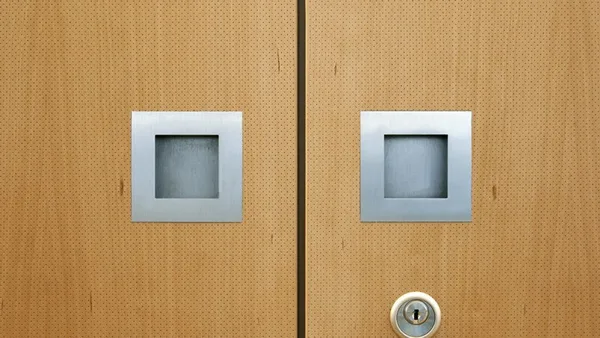 αw 1.00
alpha AKUSTIK
alpha AKUSTIK NANOLITE
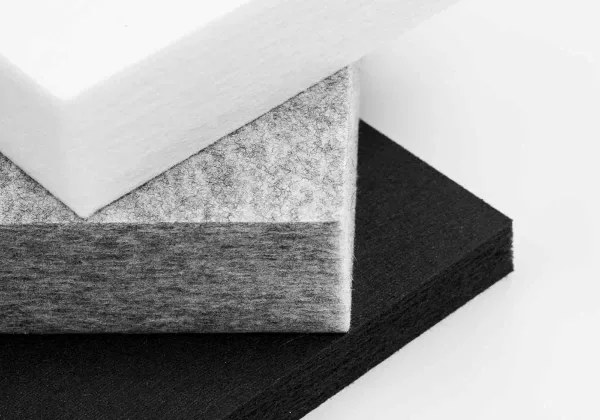 αw 1.00
BK Raumakustik
aPerf® pad
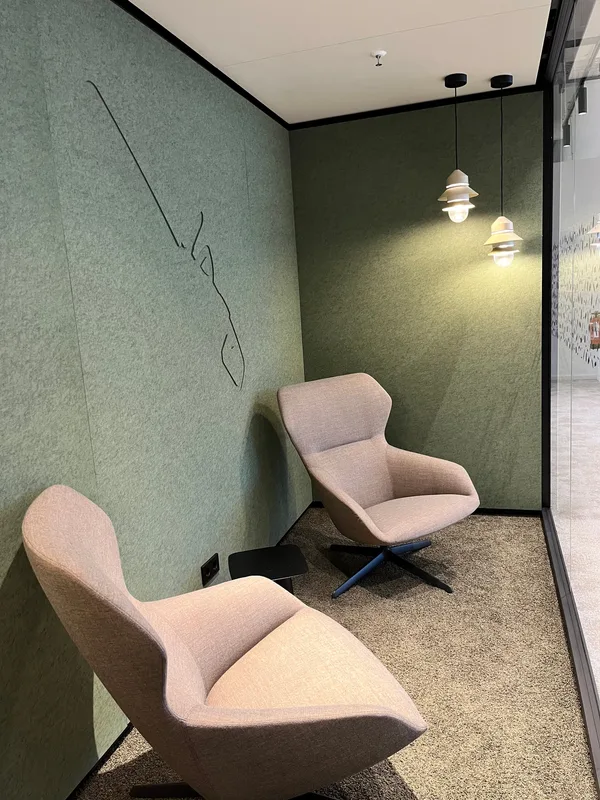 αw 1.00
BK Raumakustik
aPerf® panel
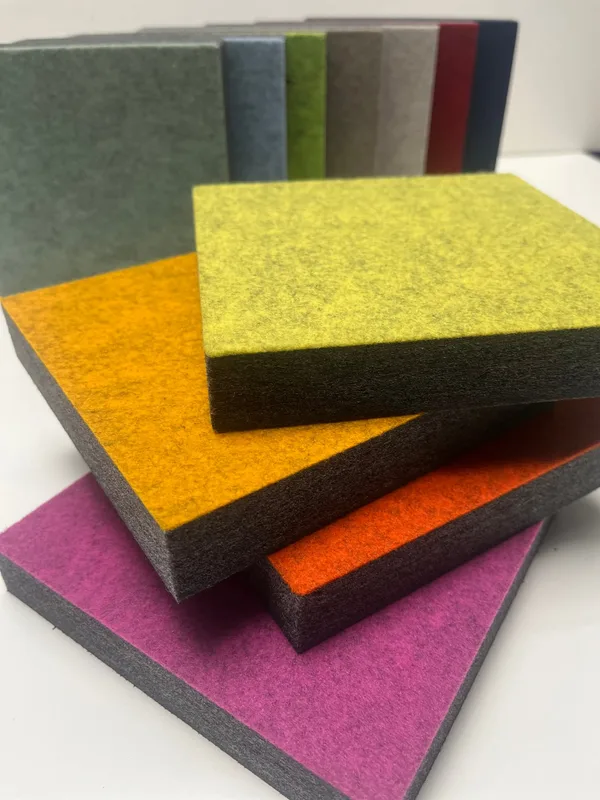 αw 1.00
BK Raumakustik
aPerf® panel colour
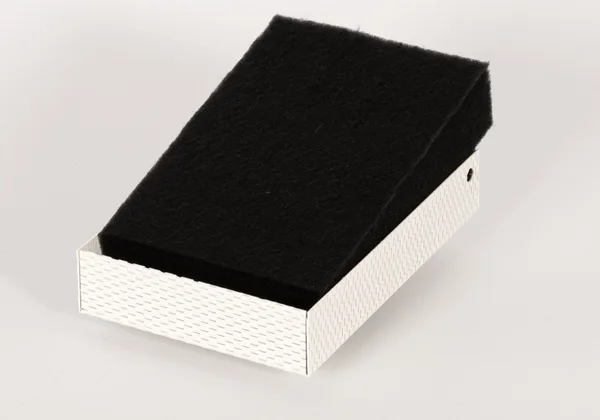 αw 1.00
BK Raumakustik
aPerf® wool
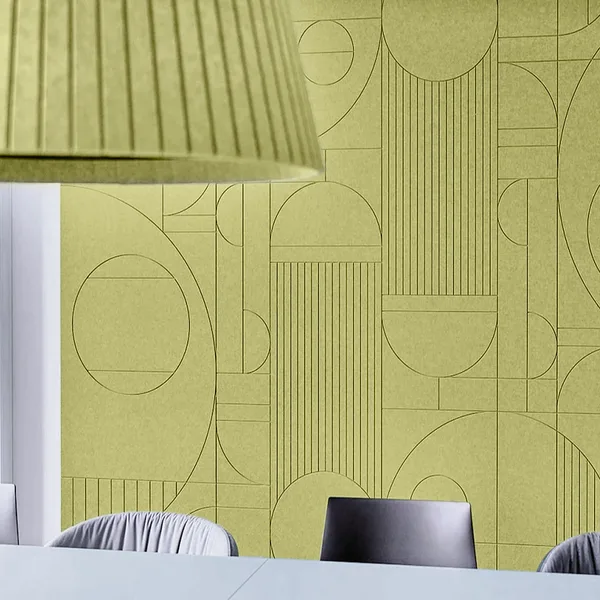 αw 1.00EPD
B11
B11 Archisonic Felt
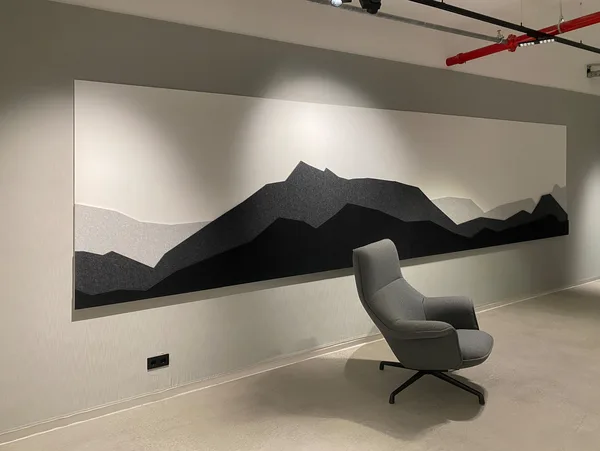 αw 1.00EPD
SilentFiber
Bluefiber Acoustic Panel
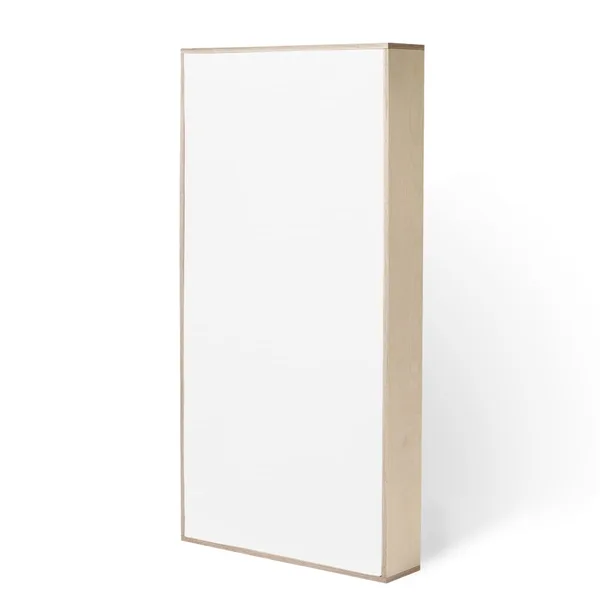 αw 1.00
MW Acoustics
Broadband Absorber Premium
Office absorber types compared
| Effect | Typical αw | Mounting | Best for | |
|---|---|---|---|---|
| Acoustic ceiling / raft | Lowers the overall level across the room | 0.8–1.0 | Suspended or surface-mounted | Open-plan offices, baseline treatment |
| Wall absorber | Damps early reflections, complements the ceiling | 0.8–1.0 | Wall-mounted | Meeting rooms, walls between desks |
| Screen / partition | Blocks direct speech transfer between desks | 0.7–1.0 (both sides) | Freestanding or desk-mounted | Open space, flexible desks |
| Furniture absorber / acoustic art | Targeted addition, design accent | 0.5–0.9 | Wall or freestanding | Small offices, retrofits |
How much absorber area does an office need?
A practical starting point is 0.15 to 0.25 m² of high-performance absorber (αw ≥ 0.8) per square metre of floor area. A 100 m² office therefore needs roughly 15 to 25 m² of absorber, starting at the ceiling. Use the upper end for tall rooms or many hard surfaces (glass, concrete, screed).
For a reliable design, reverberation time is calculated. The Acoustic Index reverberation calculator uses each product's stored measurement data directly.
What to look for in the measurement data
The decisive figure is the weighted sound absorption coefficient αw, ideally backed by a reverberation-chamber measurement. An αw of 1.0 means practically complete absorption in the rated range. Also check the mounting type (direct vs. with an air gap), because an air gap markedly improves low-frequency performance.
Fire safety is rarely critical in offices but mandatory in escape routes. The fire class (A1 non-combustible to F) is filterable.
Frequently asked questions
Which sound absorber is best for an office?
The most effective option is a broadband acoustic ceiling or ceiling raft with αw ≥ 0.8, because the ceiling is the largest free surface in the room. Wall absorbers and screens then damp the direct speech transfer between workstations. The combination of ceiling plus wall gives the best result per square metre invested.
How many sound absorbers does an open-plan office need?
A rule of thumb is 0.15 to 0.25 m² of high-performance absorber (αw ≥ 0.8) per square metre of floor area. A 100 m² office therefore needs about 15 to 25 m² of absorber, preferably on the ceiling. For an exact design, reverberation time is calculated.
What does the αw value mean?
αw is the weighted sound absorption coefficient, a single number between 0 and 1. The higher it is, the more sound the material absorbs. αw = 1.0 corresponds to practically complete absorption. It is derived from a reverberation-chamber measurement and makes products directly comparable.
Do screens really help against office noise?
Yes, screens that absorb on both sides block direct speech transfer between neighbouring desks and reduce distraction. They do not replace ceiling absorption, though: without a damped ceiling the room stays reverberant overall. Screens work best as a complement to an acoustic ceiling.
What does an office acoustic solution cost?
Prices depend on product, area and mounting and are requested directly from the manufacturer. Acoustic Index is manufacturer-neutral and lists measurement data, not prices. The manufacturer profile links through to the supplier. The database helps you find technically suitable products before you enquire.
Do office absorbers need a fire rating?
In ordinary offices fire safety is rarely mandatory, but it is required in escape routes and certain public buildings. The decisive figure is the fire class (A1 non-combustible to F). You can filter by minimum fire class in the search.
Find matching office absorbers
Compare all products for office acoustics with measurement data and filter by αw, material and fire class.
Office absorbers in search