Ceiling absorbers and acoustic ceilings
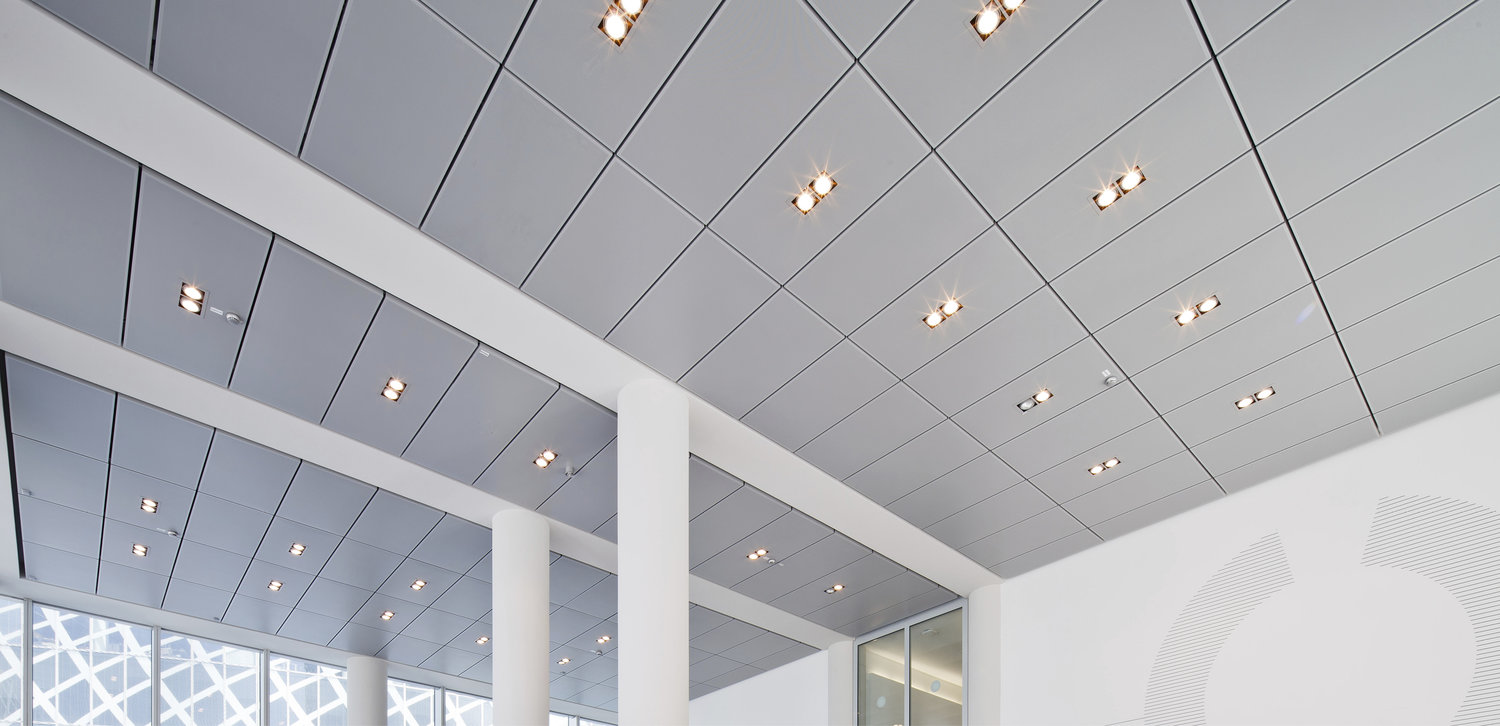
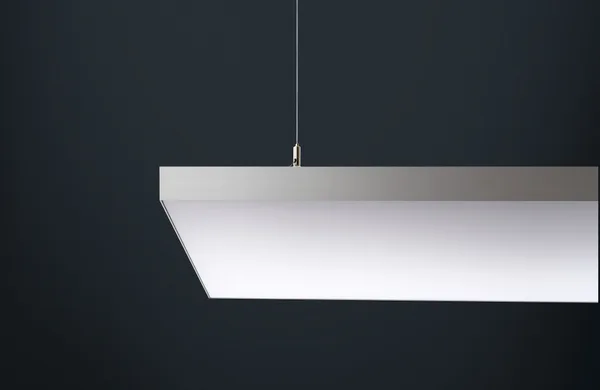
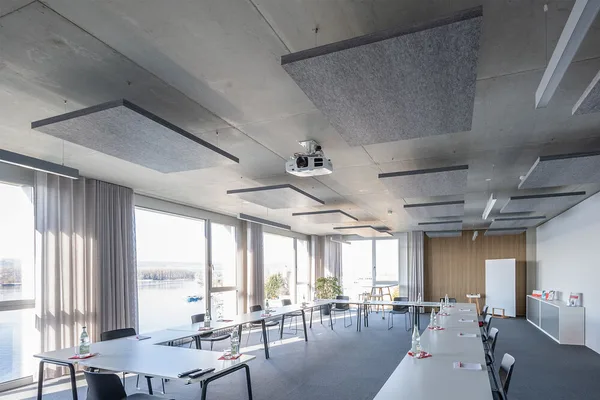
The ceiling is usually the largest uninterrupted free surface in a room, so it delivers the most absorption per square metre. A closed acoustic ceiling lowers the overall level throughout the room, while suspended systems also improve low-frequency absorption through the air gap. Good systems reach αw 0.9 to 1.0.
If you want to calm a reverberant room, the ceiling is the place to start. It runs parallel to the floor, is rarely interrupted by windows or furniture, and therefore offers the best ratio of effort to acoustic effect. Only once the ceiling is fully used do wall absorbers against specific reflections pay off.
Last updated: 28 June 2026
- matching products
- 147
- datasets total
- 1,896
- absorption coefficient
- αw up to 1.0
- measurement method
- Reverberation chamber
Ceiling absorbers with measurement data
Ceiling-mounted products (closed ceilings, suspended systems, surface panels, rafts), sorted by absorption coefficient.